
A major flash flood has hit the Grand Canyon in Arizona, leaving two people dead and causing serious damage inside one of the world’s most famous natural landmarks. Rescue teams are continuing their search after the sudden flooding swept through parts of the canyon over the weekend.
The flash flood struck the Bright Angel Creek and Phantom Ranch area on August 29, after heavy rain and thunderstorms moved across the region. The steep and rocky landscape of the Grand Canyon made the situation especially dangerous, as large amounts of rainwater quickly moved through the narrow canyon.
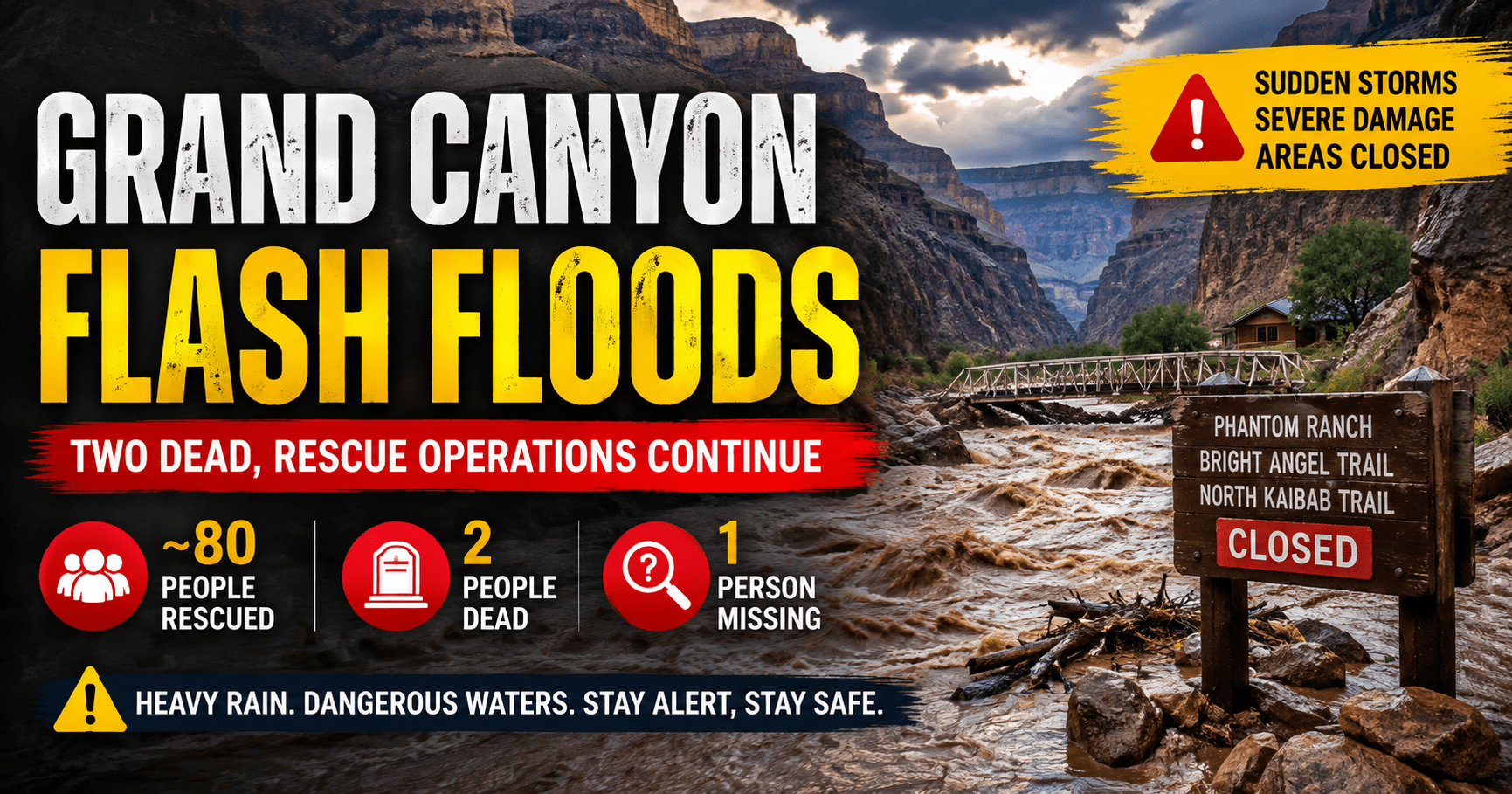
According to the latest reports, around 80 people were rescued or evacuated from the affected areas. Two people have died, while one person is still unaccounted for, according to officials.
Heavy Rain Turned Into a Dangerous Flash Flood
The flooding happened suddenly during a period of strong monsoon storms in Arizona. Hikers in the canyon reported seeing large amounts of muddy water, rocks, trees and other debris being carried through the waterways.
The Grand Canyon can be particularly dangerous during the summer monsoon season. Rain falling far upstream can cause water levels to rise rapidly, sometimes even when there is no rain directly above a particular location.
The National Park Service warns that flash floods can happen with little or no warning in the inner canyon.
Hikers Rescued by Helicopter
The sudden flooding left many hikers and campers trapped in parts of the canyon.
According to officials, 45 people were rescued by Saturday evening, while another 37 people were evacuated on Sunday. Helicopters were used to move people out of dangerous areas.
Rescue teams also faced difficult weather conditions as additional rain continued in the region. Officials warned that more storms could make search and recovery operations more difficult.
Two People Confirmed Dead
Authorities have confirmed two deaths following the flooding.
The body of a 46-year-old man was recovered near Crystal Rapids along the Colorado River. Officials later confirmed that a second person had also died.
One of the victims was identified as John Giusti, a 53-year-old chiropractor from Texas. His family said he had travelled to the Grand Canyon with two friends for several days of hiking, camping, fishing and exploring.
Officials initially reported that around 15 people could be missing or unaccounted for. After checking permits and other information, authorities said Monday that they had no reason at that time to believe anyone besides one person remained missing.
Major Damage Inside the Grand Canyon
The flooding did not only affect hikers. It also caused significant damage to infrastructure inside the canyon.
Several trails and bridges were damaged, while areas around Phantom Ranch and Bright Angel Campground were badly affected.
One of the biggest concerns is damage to the Transcanyon Waterline, an important pipeline that supplies water to the South Rim and inner canyon. Officials said a significant portion of the pipeline was damaged or destroyed.
Because of the damage, the park has introduced strict water restrictions.
Popular Areas Remain Closed
The National Park Service has closed several areas following the flood.
Phantom Ranch, Bright Angel Campground, the Phantom Ranch Canteen and cabins, the North Kaibab Trail and the Black Bridge and Silver Bridge remain closed because of the flooding. There is currently no estimated reopening date for these areas.
Visitors are being asked to stay away from the closed areas while rescue and recovery operations continue.
Some trails on the South Rim remain open, but conditions can change quickly because of the continuing risk of storms and flash flooding.
More Rain Could Create Additional Problems
The biggest concern now is the possibility of additional thunderstorms.
The Grand Canyon is currently in the monsoon season, when sudden thunderstorms can produce intense rainfall. Because the canyon is extremely steep, water can travel rapidly downhill and turn normally small streams into dangerous torrents.
The National Park Service advises hikers to pay attention to weather conditions upstream and to move immediately to higher ground if they hear the sound of rushing water.
The latest flooding is a reminder that even experienced hikers need to take weather warnings seriously when exploring the Grand Canyon.
Grand Canyon Flooding Shows the Power of Nature
The Grand Canyon attracts millions of visitors every year, but its enormous size and rugged landscape can also make rescue operations extremely difficult.
What may look like a normal summer rainstorm from the canyon rim can become a powerful flash flood deep inside the canyon. The latest disaster has once again shown how quickly weather conditions can change in the region.
As rescue and recovery operations continue, authorities are asking visitors to follow closure orders and stay away from damaged areas.
The focus now remains on finding the remaining missing person, supporting those affected by the disaster and assessing the extensive damage caused by the flood.