New Delhi: The 18th BRICS Summit concluded in New Delhi on September 13, 2026, with leaders discussing global conflicts, trade, economic cooperation, technology, artificial intelligence, climate change and reforms to international institutions.
India hosted the summit under its 2026 BRICS chairship with the theme “Building for Resilience, Innovation, Cooperation and Sustainability.” The summit brought together the expanded BRICS grouping at a time of major geopolitical and economic challenges.
New Delhi Declaration Adopted
One of the biggest outcomes was the unanimous adoption of the New Delhi Declaration 2026.
The declaration reaffirmed BRICS' commitment to multilateralism, international cooperation, sustainable development and a greater role for developing countries in global decision-making.
The leaders also called for international disputes to be addressed through dialogue, consultation and diplomacy.
BRICS Calls for Restraint in Middle East
The ongoing conflict in the Middle East was one of the most sensitive issues at the summit.
BRICS leaders expressed serious concern over escalating violence and called for maximum restraint, while supporting diplomatic efforts to prevent further escalation.
The issue was particularly significant because both Iran and the UAE are members of the expanded BRICS grouping despite their different positions in the current regional conflict.
India Pushes Global South Agenda
Prime Minister Narendra Modi used India's BRICS presidency to push for a stronger voice for the Global South.
India's approach focused on making BRICS more people-centric and strengthening cooperation in areas such as economic development, technology, disaster resilience, healthcare, food and energy security.
According to the Prime Minister's Office, India organised more than 350 BRICS-related meetings during its chairship across nearly 30 Indian cities.
AI Becomes a Major BRICS Priority
Artificial intelligence emerged as an important area of future cooperation.
China announced plans to establish a BRICS AI Open Source Zone, aimed at encouraging cooperation on large language models, AI training and development of an open AI ecosystem.
China also proposed a BRICS Special Economic Zone partnership and announced plans to host a BRICS Service Trade Forum in 2027.
Focus on Trade and Cross-Border Payments
Economic cooperation remained at the heart of the summit.
BRICS members discussed strengthening trade and investment ties, improving financial cooperation and developing alternatives that can make cross-border transactions easier.
The expanded grouping is increasingly looking at ways to reduce vulnerabilities caused by disruptions in global trade, sanctions and supply chains.
BRICS Wants Reforms in Global Institutions
Another major theme was reform of international institutions.
BRICS leaders called for a more representative and equitable international system, with greater participation of emerging markets and developing countries in global decision-making.
The declaration particularly emphasised strengthening multilateral institutions and giving developing nations a greater voice.
Expanded BRICS Has Greater Global Weight
The expanded BRICS grouping now includes 11 members: Brazil, Russia, India, China, South Africa, Egypt, Ethiopia, Indonesia, Iran, Saudi Arabia and the United Arab Emirates.
Together, these countries represent around 49.5% of the world's population, 40% of global GDP and 26% of global trade, according to India's Press Information Bureau.
This expansion has significantly increased BRICS' geographical and economic reach across Asia, Africa, the Middle East and Latin America.
Modi-Putin-Xi Meeting Draws Attention
The summit also attracted attention for high-level bilateral interactions.
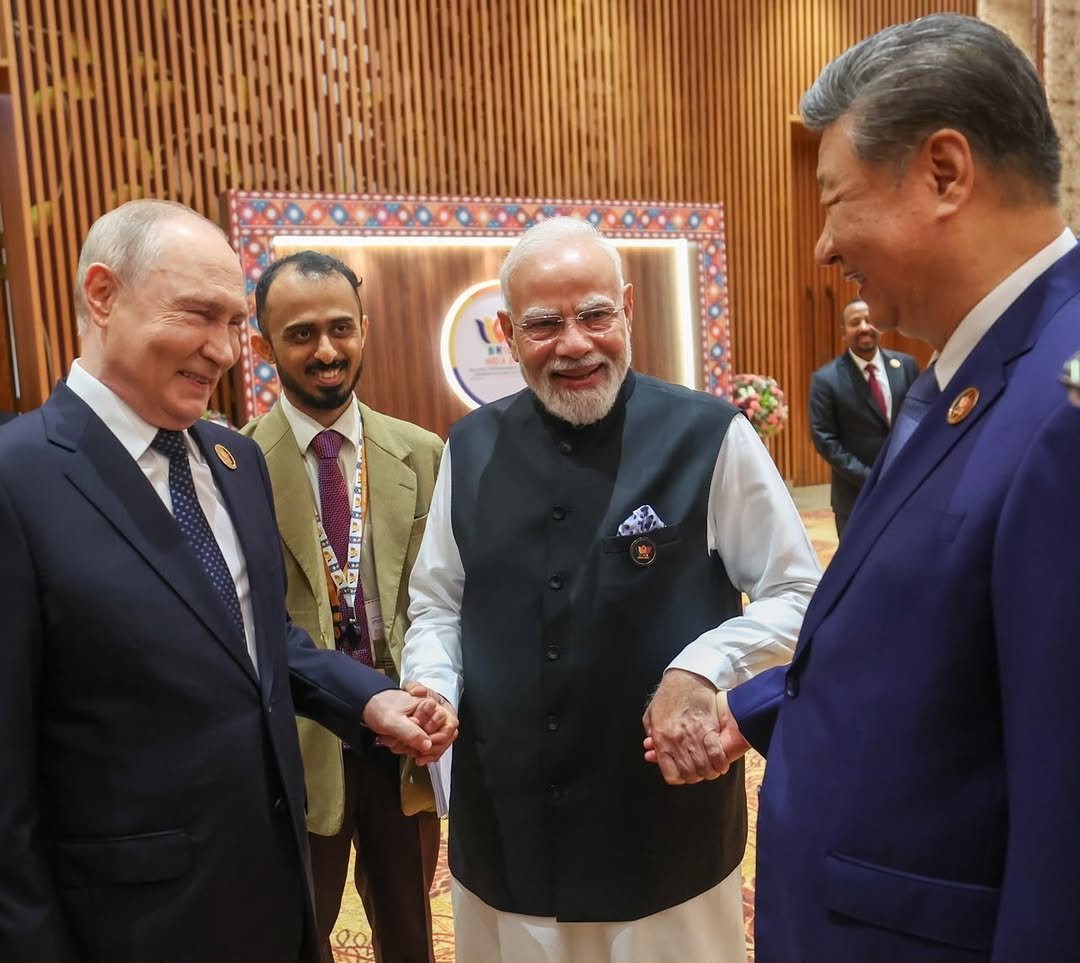
Prime Minister Narendra Modi held meetings with Russian President Vladimir Putin and Chinese President Xi Jinping. Their interactions were closely watched because of India's relationships with both countries and the wider geopolitical situation.
Xi's visit was particularly notable as it was his first visit to India in seven years.
BRICS Leaders Plant Banyan Trees
In a symbolic environmental gesture, BRICS leaders participated in a banyan tree planting ceremony at Bharat Mandapam in New Delhi.
The banyan tree was presented as a symbol of deep roots, growing strength and a shared future for the grouping.
China to Host BRICS Summit in 2027
The next BRICS summit will be hosted by China in 2027.
BRICS leaders expressed support for China's upcoming presidency and the 19th BRICS Summit.
Why the BRICS Summit Matters
The 2026 BRICS Summit was important not just because of the number of participating countries, but because the grouping is becoming a major platform for emerging economies.
The discussions in New Delhi showed that BRICS wants to play a larger role in global economic governance, technology, international trade, financial cooperation and diplomacy.
For India, the summit also provided an opportunity to showcase its diplomatic influence and push issues important to developing countries.
Conclusion
The 2026 BRICS Summit in New Delhi ended with a strong focus on global cooperation, economic resilience, AI, sustainable development and a greater role for the Global South.
The adoption of the New Delhi Declaration, discussions on the Middle East conflict, plans for greater technology cooperation and the push for reforms in global institutions were among the biggest takeaways.
With China taking over the BRICS presidency in 2027, attention will now turn to how the expanded grouping converts these commitments into practical cooperation.
BRICS Summit 2026: Main Highlights, Key Decisions and What Happened in New Delhi